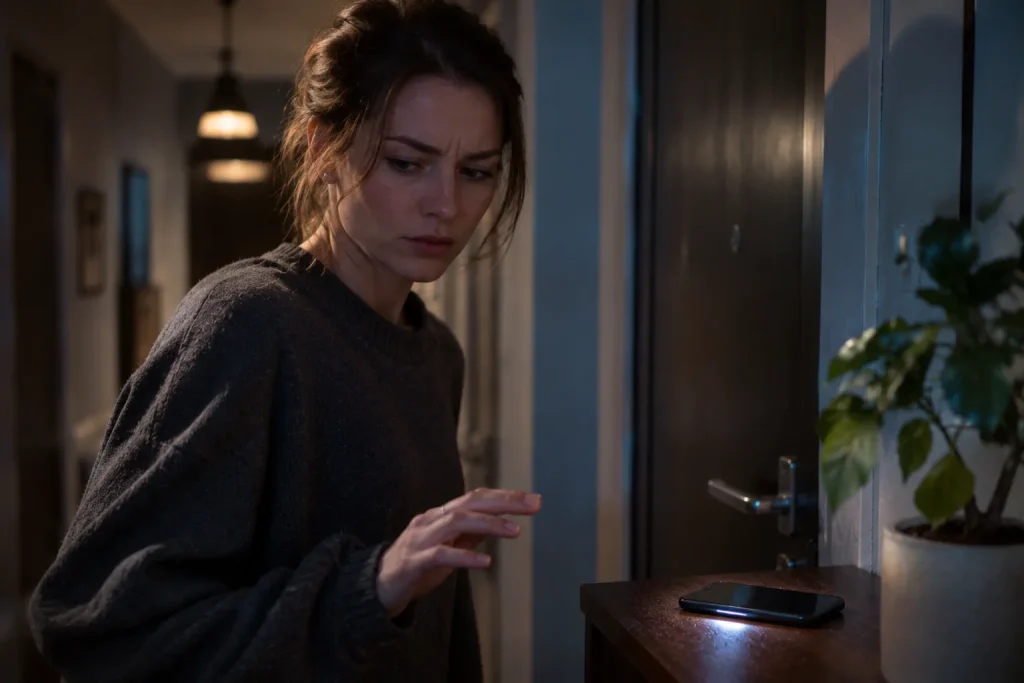

A disrespectful partner doesn’t always look like a villain. Sometimes it’s an eye roll when you speak, a joke at your expense in front of friends, or a tone that makes you feel small, followed by “relax, I was kidding” when you object.
If you’ve been left wondering whether you’re overreacting, this article is for you. It explains what counts as disrespect and what doesn’t, what to say in the moment, how to raise the pattern later, and when it points to something bigger than a communication problem. It assumes you’re safe with your partner. If you’re afraid of them, go straight to the last sections.
In this guide:
- What counts as a disrespectful partner
- Why partners become disrespectful
- How to respond to a disrespectful partner: 5 steps
- What to say: examples
- “I was just joking” and “you’re too sensitive”
- Check your own part
- When it’s more than disrespect
- What progress looks like
- Frequently asked questions
What Counts as a Disrespectful Partner (and What Doesn’t)
It helps to separate four things that can feel the same in the moment.
Disagreement. “I don’t think that’s a good idea.” You can disagree firmly and still treat someone with respect.
A bad moment. Someone snaps after a long day, then notices and apologizes. That is ordinary human behavior.
Disrespect. Mocking, eye-rolling, interrupting, belittling, dismissing your feelings, or ignoring a clear “no.” The message underneath is that your perspective or dignity doesn’t count.
A pattern. The same behavior repeats, and nothing is repaired afterward. This is where the real damage builds.
Research helps explain what people mean by respect. In three studies of university students, published by Juliana Frei and Phillip Shaver in Personal Relationships (2002), participants described respect mostly through qualities like being considerate, honest, accepting, a good listener, trustworthy, and not abusive. Respect for a partner was strongly linked to relationship satisfaction, more than liking or loving on their own. The samples were young, mostly female students, the data were self-reported, and the design couldn’t show cause and effect, so treat this as a useful description, not proof.
Gottman’s work gives the extreme end of disrespect a name: contempt. The Gottman Institute (2026) describes it as sarcasm, mockery, and eye-rolling that come from a stance of superiority, and says it tends to grow where one partner feels unappreciated. It treats contempt as the most destructive of the Four Horsemen, drawing on Gottman’s studies from the 1990s and early 2000s. That is a body of work from one research group, so it’s best read as a strong signal rather than a rule for any one couple.
Why Partners Become Disrespectful
Understanding why you have a disrespectful partner doesn’t excuse the behavior, but it can change how you respond. Common explanations include built-up resentment, stress, copying the way their family spoke to each other, and feeling unappreciated themselves. Sometimes it’s carelessness. Occasionally it’s a deliberate way to feel in control.
You can’t tell which from the outside, and you don’t have to. What matters is how the behavior affects you and whether your partner is willing to change it once they know.
How to Respond to a Disrespectful Partner: 5 Steps
1. Name it briefly, in the moment
Skip the speech. One short, calm sentence is enough: “That felt dismissive.” “Please don’t talk to me like that.” Short statements are harder to argue with than long ones, and they tell your partner the line exists.
2. Don’t match it
Answering a sneer with a sneer escalates the fight and gives your partner a way to say you’re just as bad. Keep your voice level: “I want to talk about this, but not like this.”
3. Pause if it continues
You don’t have to continue a conversation while being mocked. Say: “I’ll keep talking when we can both do it respectfully. I’ll come back to this at eight.” The return time matters, because it separates a boundary from a silent exit. Our guide on how to communicate better covers how to take a break well.
4. Raise the pattern later, when you’re both calm
Describe the behavior, its effect, and a request: “When I mentioned my plan yesterday, you rolled your eyes and changed the subject. I felt dismissed. Can we agree to disagree without that?” Stick to what happened, not what it says about their character.
5. Decide what you’ll do if it keeps happening
A boundary is about your own action, not their behavior: “If it turns into name-calling, I’ll leave the room.” Then follow through, calmly and consistently. Our article on setting boundaries in relationships explains how to do this without turning it into a punishment.

What to Say: Examples
These examples are illustrative. Put them in your own words.
A joke at your expense.
Instead of: laughing it off, then stewing for days.
Try: “I didn’t love that joke. Please don’t make it in front of other people.”
An eye roll or sigh.
Instead of: “Don’t you roll your eyes at me!”
Try: “I noticed that. If you disagree, tell me. I’d rather hear it.”
Interrupting.
Instead of: shouting over them.
Try: “I’d like to finish my thought, then I’ll listen to yours.”
Dismissing your feelings (“You’re overreacting”).
Instead of: proving you’re not.
Try: “You may see it differently, but this is how it felt to me, and I’m asking you to take it seriously.”
Name-calling.
Instead of: returning an insult.
Try: “I’m ending this conversation for now. We can continue when it’s respectful.”
“I Was Just Joking” and “You’re Too Sensitive”
These replies are common, and they often turn an issue about behavior into an argument about your reaction. You don’t have to win it. You can say: “Maybe you meant it as a joke. It hurt, and I’m asking you to stop.”
Noticing this response once or twice doesn’t mean you’re being manipulated. But if your partner consistently denies what happened, rewrites it, or makes you doubt your own memory, read our guides on gaslighting and emotional manipulation.
Check Your Own Part
It’s worth asking, without self-blame, whether you also show contempt when you’re hurt: sarcasm, eye-rolling, a cutting remark. Most of us do sometimes. The Gottman Institute’s suggested antidote is a regular habit of appreciation, noticing and saying what your partner does well, which gives conflict a softer base. This isn’t about earning respect through perfect behavior. It’s about not feeding the loop.
When It’s More Than Disrespect
Everyday disrespect can be addressed with the steps above. These signs are different: humiliation in front of others as a habit, controlling money or friendships, threats, intimidation, punishing you for setting a boundary, or making you afraid. Our guide on the signs of a toxic relationship can help you look at the pattern clearly.
If you feel afraid, talk to someone you trust or a professional. In the US, the National Domestic Violence Hotline (1-800-799-7233, thehotline.org) offers confidential support, and local services exist elsewhere. Many therapists advise against starting with couples therapy where there is fear or abuse, so individual guidance is usually a safer first step.
What Progress Looks Like
You’ll notice it in small ways: fewer incidents, your partner catching themselves (“sorry, that came out wrong”), and a faster repair when it happens. You may also feel more able to say “that’s not okay” without bracing for a fight.
If you’ve been clear, calm, and consistent for a while and nothing changes, or it gets worse, that is important information. You may need outside support to decide what to do next.
Where to Start
Pick one behavior from your disrespectful partner that you’ve been swallowing, such as the sigh or the joke, and prepare one short sentence for the next time it happens. Saying it once, calmly, often changes how you feel about the whole relationship.
Frequently Asked Questions
Is it normal for a partner to be disrespectful sometimes?
Occasional lapses are common, especially under stress. What matters is whether it’s followed by repair and whether it’s becoming a pattern. Repeated disrespect with no apology deserves a direct conversation.
Should I leave a disrespectful partner?
There’s no single answer. Consider how often it happens, whether your partner takes responsibility when you raise it, whether it’s escalating, and how safe you feel. If you feel afraid or controlled, getting support from a professional is a sensible first step.
Can a disrespectful partner change?
Many people can, if they recognize the behavior, take responsibility, and are willing to practice something different. There are no guarantees. Judge it by consistent actions over months, not by promises made in the heat of an apology.